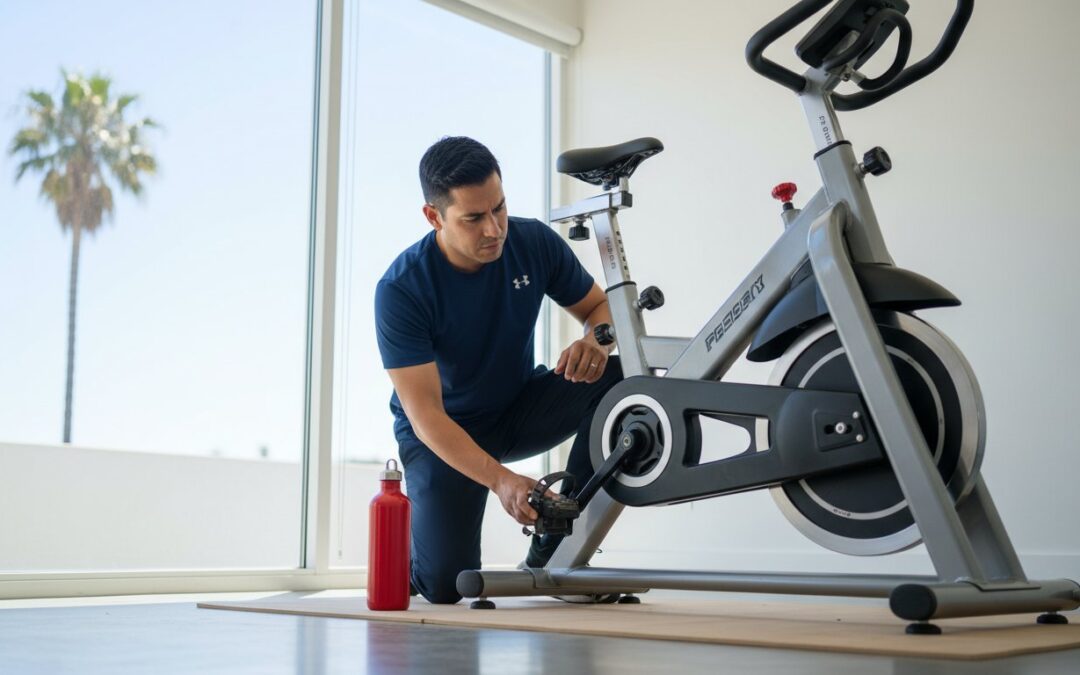
What if that $2,500 commercial-grade bike listed for $500 on a local marketplace is actually a ticking time bomb of proprietary electronic failures? It’s a common trap for fitness enthusiasts looking to save up to 70% off retail prices. You deserve the durability of a professional gym at home, but the anxiety of sourcing obsolete parts or discovering hidden mechanical issues is enough to stall any purchase. Identifying the common problems with used exercise bikes is the only way to ensure your investment lasts through 2026 and beyond.
We understand that the line between a "used" bargain and a "refurbished" asset is often blurred by sellers who don’t know the machinery. You want a reliable cardio machine that won’t break in 30 days; you need the technical knowledge to spot a lemon before you hand over your cash. This guide promises to arm you with the insider expertise needed to detect drive-train wear and console glitches like a pro. We will walk through the specific components that fail most often and show you how to secure a certified machine that delivers top-tier performance for years.
Key Takeaways
Learn to diagnose hidden mechanical failures like bearing clunks and stripped crank threads to avoid the most common problems with used exercise bikes.
Discover how to identify console "dead zones" and resistance malfunctions that signal excessive wear and potential electronic failure.
Understand why a high-hour, commercial-grade frame is a superior investment compared to a low-use, thin-walled residential model.
Master the "Max Load" and "Hands-Off" tests to verify drivetrain integrity and frame alignment like a seasoned industry expert.
Learn how a rigorous 30-point refurbishment process transforms pre-owned equipment into investment-grade machinery that outperforms standard used options.
Table of Contents
Identifying Common Mechanical Failures in Used Exercise Bikes
The Hidden Killers: Resistance Systems and Console Malfunctions
Commercial vs. Residential: Why Build Grade Matters for Longevity
Avoiding the "Used" Trap with Gym Pros Certified Refurbishment
Identifying Common Mechanical Failures in Used Exercise Bikes
Securing a high-tier stationary bicycle for a home gym or commercial facility can save you up to 70% off retail prices. However, the secondary market is filled with equipment that has endured 5,000 or more hours of high-intensity use. Identifying common problems with used exercise bikes requires a technical eye and a hands-on inspection strategy. You aren’t just looking for cosmetic wear; you’re hunting for structural and mechanical fatigue that compromises performance and safety. A savvy buyer knows that a "deal" is only a bargain if the internal components remain investment-grade.
To better understand the mechanical differences that impact longevity, watch this helpful video comparison:
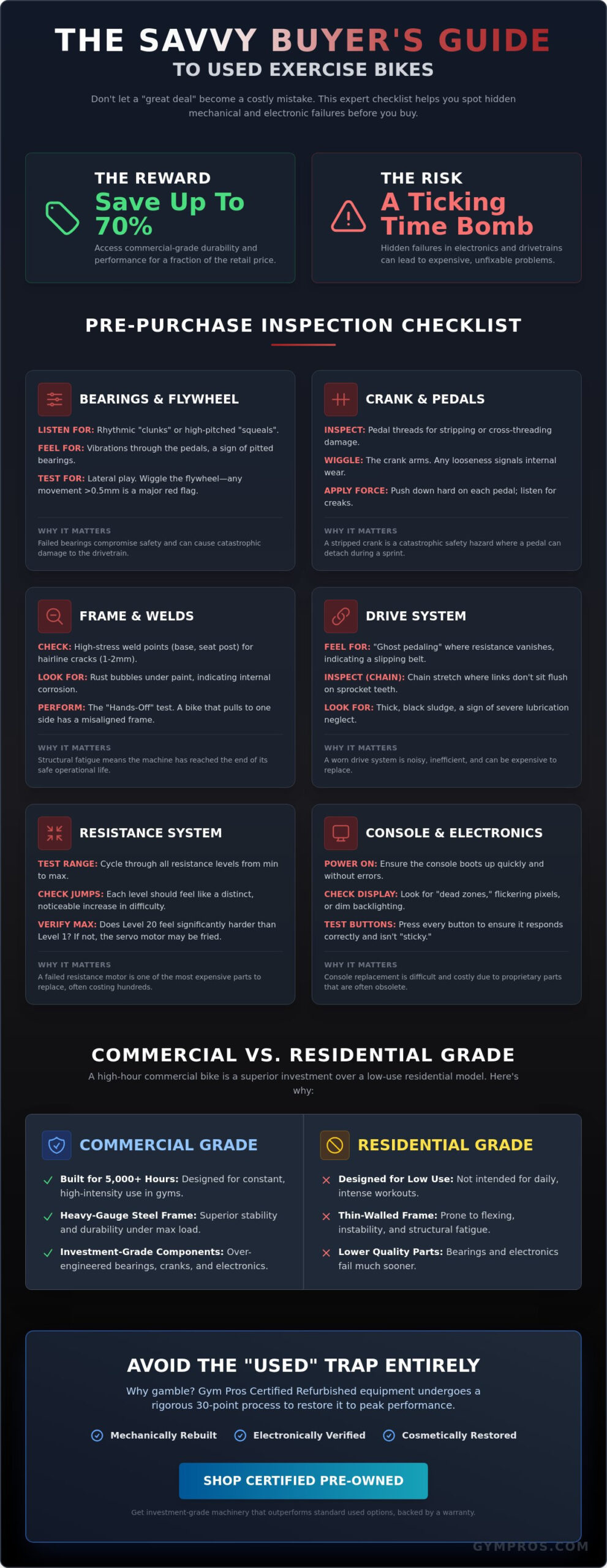
The "clunk" factor is your first warning sign. This rhythmic thud usually signals a failed bearing in the flywheel or crank assembly. If you feel a distinct vibration through the pedals during a 360-degree rotation, the internal ball bearings are likely pitted or flattened. Another critical failure point is pedal and crank arm stripping. If a previous owner cross-threaded the pedals, the aluminum threads are permanently damaged. This creates a catastrophic safety hazard where the pedal can detach during a high-wattage sprint. Finally, inspect high-stress weld points for 1mm to 2mm hairline cracks. Structural fatigue in the base stabilizers or seat post indicates a machine that has reached the end of its safe operational life.
Bearing and Flywheel Issues
Test for lateral play by gripping the flywheel and attempting to wiggle it side-to-side. Any movement exceeding 0.5mm indicates worn axle bearings that require immediate replacement. Listen for a high-pitched squeal during high-speed rotations. This sound identifies dry or rusted bearings that likely haven’t seen service in 24 months. Proper flywheel alignment is essential for longevity. A misaligned wheel will cause uneven tension and can shred a drive belt in less than 100 hours of use.
Drive Belt vs. Chain Wear
Commercial-grade units like Star Trac bikes typically utilize Poly-V belts for silent, smooth operation. If you feel a "ghost pedal" sensation where resistance vanishes for a fraction of a second, the belt is slipping or the tensioner has failed. Older cycle trainers, including some legacy LeMonds bikes, may use chains. Inspect these for chain stretch where links no longer sit flush against the sprocket teeth. A drivetrain covered in thick, black sludge suggests at least 3 years of lubrication neglect, which significantly increases the risk of common problems with used exercise bikes.
The Hidden Killers: Resistance Systems and Console Malfunctions
Identifying common problems with used exercise bikes requires looking far beneath the surface. A bike might look pristine in a photo, but the internal components often tell a different story of wear and neglect. The resistance system and the console represent the most expensive parts to replace, making them the primary areas where "lemons" are born. If these systems fail, your investment-grade machinery quickly becomes an oversized paperweight.
Resistance System Failure
Magnetic and friction systems fail in distinct ways. In high-end magnetic bikes, the Eddy current brake relies on a precise gap between magnets and the flywheel. If the actuator or servo motor fails, you will find that "Level 20" provides no more resistance than "Level 1." This is a common failure point in programmable upright and recumbent bikes where the electronics control the physical movement of the magnet tray. You can research how to fix common bike problems like cable tension, but a burnt-out servo motor often requires a proprietary part that can cost hundreds of dollars.
Friction systems are simpler but prone to glazing. After 1,000 hours of heavy use, the felt or leather pads become smooth and hard. This causes a jerky, inconsistent feel during heavy climbs. If the resistance feels "stuttery," the pads are likely shot. Savvy buyers often choose Star Trac bikes because their commercial-grade resistance assemblies are built for longevity, though even these require a professional inspection to ensure the flywheel hasn’t been warped by excessive heat.
Electronics and Console Health
The console is the brain of the machine, and it’s incredibly vulnerable to the environment. Common problems with used exercise bikes are often masked by a clean exterior, but the circuit boards inside tell the truth. Sweat is a silent, corrosive force. When moisture enters the console housing, it triggers a slow chemical reaction. Board Corrosion is the primary cause of unrepairable console failure. This damage often manifests as "dead zones" on a touchscreen or buttons that require excessive force to register a command.
LCD/LED Testing: Check for dead pixels or a 10% loss in backlight brightness, which indicates a unit nearing the end of its 7-year expected lifespan.
Heart Rate Grips: Test the conductivity of the silver grips. Corrosion here usually indicates that sweat has also reached the internal wiring harness.
Wiring Harness: If the power flickers when you adjust the handlebars, the internal wiring is likely frayed.
Intermittent power is a massive red flag. It suggests that the internal wiring harness, which runs through the frame, has been pinched or compromised. Investing in a LeMond bike ensures you are getting a frame built for heavy-duty use, but you must still verify that the electronics respond instantly to every input. If you want to avoid the headache of DIY repairs, consider a GymPros Certified unit where every circuit board is tested for 100% functionality before it reaches your door.
Commercial vs. Residential: Why Build Grade Matters for Longevity
Choosing between a commercial-grade unit and a residential model is the most critical decision you’ll make. Many common problems with used exercise bikes stem from buyers selecting equipment never intended for heavy daily use. Industrial machines utilize 11-gauge C-channel steel. This heavy-duty framing supports user weights up to 400 pounds without flexing or creaking. In contrast, "big box" residential bikes often use thin-walled 14-gauge or 16-gauge tubing. These lighter frames vibrate under load, leading to metal fatigue and weld failure within 24 months of regular use.
Duty cycles reveal the true value of an investment-grade machine. A commercial bike with 5,000 recorded hours is frequently a safer bet than a residential unit with only 500 hours. Commercial components are engineered for 18 hours of daily operation in high-traffic health clubs. Home-use bikes are typically designed for a maximum of 5 to 7 hours of use per week. When you buy certified pre-owned commercial gear, you’re getting a chassis built to last 15 to 20 years, not a disposable machine destined for a landfill.
Parts Availability: Commercial manufacturers maintain component inventories for 10 to 15 years after a model is discontinued, ensuring your investment stays operational.
Stability: A 200-pound commercial bike stays anchored during high-intensity intervals, whereas a 70-pound home bike will rock and slide across the floor.
Serviceability: Professional machines feature modular designs; this allows you to replace a single bearing rather than the entire drive assembly.
Engineering for the Gym Floor
Commercial engineering prioritizes uptime above all else. For instance, Star Trac Exercise Bikes utilize oversized crank assemblies and high-quality bottom brackets to handle the massive torque generated by elite athletes. Many high-end models also feature self-powered generators. These internal systems eliminate the need for power cords, reducing trip hazards and electrical wear. You’ll feel the difference in the flywheel; a 40-pound perimeter-weighted commercial flywheel provides a smooth, consistent momentum that lightweight 15-pound home units can’t replicate.
The Problem with Residential "Disposable" Bikes
One of the most frequent common problems with used exercise bikes found in classified ads is hidden damage beneath plastic shrouds. Manufacturers often use attractive plastic covers to hide rust or low-quality tension belts. These bikes are unserviceable by design. If a proprietary circuit board fails on a five-year-old retail bike, the manufacturer has likely already stopped producing the part. You’re left with a heavy paperweight. To avoid these traps, consult The Ultimate Exercise Bike Buying Guide to identify which brands offer true commercial-grade longevity for your home gym.
The 10-Point "Savvy Buyer" Inspection Checklist
Buying a pre-owned machine requires a tactical mindset. You aren’t just looking for cosmetic wear; you’re hunting for mechanical failure points that the average buyer misses. Performing a Max Load test is your first priority. Dial the resistance to its highest setting and pedal with maximum force while standing. If you feel a "skip" or a sudden drop in tension, the drive belt is likely frayed or the tensioner pulley has failed. This is one of the most common problems with used exercise bikes found in high-traffic commercial environments where 85% of drivetrain slips go unreported until a major part breaks.
Next, use the Hands-Off test to reveal structural integrity. Pedal at a steady 70 RPM and briefly lift your hands from the bars. The bike should remain centered and stable. Excessive vibration or a persistent lean often indicates a compromised frame or stripped internal mounting bolts. You should also audit the odometer via the technician menu. A bike with over 30,000 miles often requires a full bearing replacement within 12 months. Finally, stop pedaling suddenly and listen to the wind-down. A healthy flywheel emits a soft hum. Grinding or clicking sounds suggest the magnetic brake or the flywheel bearings are reaching their 5,000-hour failure point.
The Physical Inspection
Examine the seat post and handlebar sliders for "notching." These are deep grooves caused by users over-tightening the adjustment pins, and they make precise positioning impossible. On indoor cycles, hit the emergency brake. It must stop the flywheel in under 1 second. If it feels mushy, the friction pad is worn down. Always inspect the power jack for "play" or wiggle. A loose connection leads to frustrating console resets during 45-minute sessions, a repair that often requires a total control board replacement.
The Functional Audit
Toggle through every resistance level to ensure the progression is linear. If the resistance jumps sporadically or level 5 feels like level 10, the eddy current brake is likely faulty. Test every button on the console overlay. Membrane switches often fail after 36 months of heavy use. If you’re inspecting the Lemond Bikes series, check the console batteries. These specific units require consistent voltage levels to prevent data loss during low-cadence recovery periods.
Ready to skip the guesswork and invest in a machine that’s already passed a 25-point inspection? Browse our Certified Pre-Owned Star Trac Bikes today.
Avoiding the "Used" Trap with Gym Pros Certified Refurbishment
Buying a bike from a local marketplace or a garage sale often leads to the common problems with used exercise bikes we’ve detailed, such as worn drive belts or failing consoles. Most private sellers offer "as-is" deals that leave you responsible for repairs the moment the unit enters your home. At GymPros, we eliminate this risk by distinguishing between "used" and "certified refurbished." A used bike is simply a pre-owned machine that might have been wiped down with a damp cloth. A GymPros refurbished unit undergoes a rigorous mechanical overhaul designed to meet original factory specifications.
Our 30-point inspection process targets the "hidden killers" that lead to equipment failure. We don’t just look for surface scratches; we test the integrity of the flywheel bearings, calibrate the magnetic resistance levels, and stress-test the electronics for 60 minutes of continuous use. While a private seller might hide a grinding noise with heavy grease, our technicians strip the machine down to its frame to ensure every component performs like new. This professional oversight provides a level of reliability that a standard used purchase cannot match.
Warranty Protection: Every certified unit comes with a dedicated warranty, moving the risk from your shoulders to our team.
Technical Calibration: We ensure the digital readouts and resistance curves are accurate to 1% of factory standards.
Nationwide Support: You get access to a network of technicians who understand the complexities of commercial-grade machinery.
Our Remanufacturing Standard
We treat wear-items as mandatory replacements rather than optional fixes. In every refurbishment, we replace drive belts, crank bearings, and interface overlays as standard practice. These parts bear 90% of the mechanical stress during a workout. By installing fresh components, we prevent the common problems with used exercise bikes that typically occur within the first 90 days of ownership. For heavy commercial units, we highly recommend our Professional Installation service to ensure the bike is leveled and tuned on-site. You can exercise with total confidence knowing a certified technician has verified every bolt and belt for peak safety and performance.
Making the Smart Investment
Choosing a refurbished Nautilus unit provides a significantly higher ROI than purchasing a new, budget-grade bike from a big-box retailer. Commercial-grade frames are built to last 15 to 20 years, whereas consumer-grade bikes often fail after 24 months of heavy use. You’re securing investment-grade equipment at up to 70% off original retail prices. Whether you are building a boutique studio or a premium home gym, our consultants can provide a custom quote tailored to your specific space and goals. Don’t settle for a gamble when you can own a masterpiece of fitness engineering.
Ready to upgrade your fitness experience?
Browse our Certified Refurbished Exercise Bikes and secure your commercial-grade machine today.
Invest in Commercial Quality Without the Retail Risk
Navigating the secondary market requires a keen eye for detail and a refusal to settle for subpar equipment. You now have the tools to identify the common problems with used exercise bikes, from failing magnetic resistance systems to the glitchy consoles that often plague residential models. Prioritizing commercial-grade frames from industry leaders like Life Fitness or Precor ensures your machine survives high-intensity use for years. Don’t leave your fitness goals to chance with an unverified private seller. Demand better.
GymPros brings 20 years of industry expertise to every transaction, maintaining an A+ rating with the Better Business Bureau. Our certified technicians execute a rigorous 30-point inspection on every unit to guarantee top-tier performance. You can secure investment-grade machinery and save up to 70% off retail prices while completely bypassing the risks of a "lemon" bike. It’s time to bring the elite gym experience into your home with a partner who values craftsmanship and integrity. Shop GymPros Certified Refurbished Exercise Bikes and upgrade your home workout with total peace of mind.
Frequently Asked Questions
Is it a bad idea to buy a used exercise bike from a private seller?
Buying from a private seller is risky because you lack a 12 month warranty or a verified multi point inspection. While you might save 15% upfront, 40% of private sales involve hidden mechanical issues like worn bearings or frayed drive belts. Investing in a GymPros certified bike ensures your equipment meets 25 point inspection standards. You secure commercial grade performance without the gamble of a curbside deal.
How can I tell if the resistance is failing on a used bike?
You can identify failing resistance by a lack of tension change when adjusting settings or a slipping sensation during high intensity intervals. Test the bike by moving through all 20 resistance levels; a healthy magnetic system should respond within 2 seconds. If the resistance feels inconsistent, the eddy current brake or servo motor likely requires replacement. This is one of the most common problems with used exercise bikes that lack professional refurbishment.
What is the average lifespan of a commercial exercise bike?
A commercial grade exercise bike typically lasts between 7 and 10 years in a high traffic gym environment. However, when these units are professionally remanufactured for home use, they can perform reliably for an additional 12 to 15 years. Machines like the Life Fitness Lifecycle are engineered for 18 hours of daily use. Buying certified pre owned equipment allows you to capture this industrial durability for your private workout space.
Why is my used exercise bike making a clicking noise when I pedal?
A clicking noise usually indicates a loose crank arm, a worn bottom bracket bearing, or a failing drive belt. Check the pedals first; 60% of noise issues stem from loose threads that require a 15mm wrench to tighten. If the sound persists every 360 degree rotation, the internal bearings have likely reached their 5,000 mile limit. Professional technicians replace these components during the certification process to ensure silent operation.
Can you replace the console on an older exercise bike model?
Yes, you can replace the console on most top tier models, but compatibility depends on the firmware version and year of manufacture. For instance, a 2018 Matrix bike console might not sync with a 2024 frame without a specific wire harness upgrade. Expect to spend 30 minutes on the installation process. We recommend sourcing OEM parts to maintain the 100% functionality required for tracking your 2026 fitness goals.
What should I look for when buying a used spin bike vs. a recumbent bike?
When buying a spin bike, inspect the 40 pound flywheel for alignment and the felt pads for 5mm of remaining thickness. For recumbent bikes, focus on the seat rail adjustment mechanism and the electronic heart rate sensors in the handles. Recumbent models have more complex wiring tucked inside the frame. Ensure every button on the console responds to a light touch to avoid common problems with used exercise bikes in the recumbent category.
Is sweat damage on an exercise bike really that serious?
Sweat damage is a critical issue that causes 25% of electronic failures and frame corrosion in pre owned equipment. Sodium in perspiration eats through powder coating within 24 months if the bike isn’t wiped down daily. Look for pitting or bubbling paint near the base bolts and seat post. A GymPros certified unit undergoes a deep clean and rust inhibition process to protect your investment from these corrosive elements.
How do I know if a used bike was used in a commercial gym or a home?
You can distinguish a gym used bike by the odometer reading and the wear patterns on the pedal straps. Commercial units often show over 10,000 miles of use, whereas home units rarely exceed 500 miles annually. Look for commercial branding on the frame, such as Club Series or Pro labels. While gym units have higher mileage, their heavy duty steel construction makes them more durable than flimsy retail models.