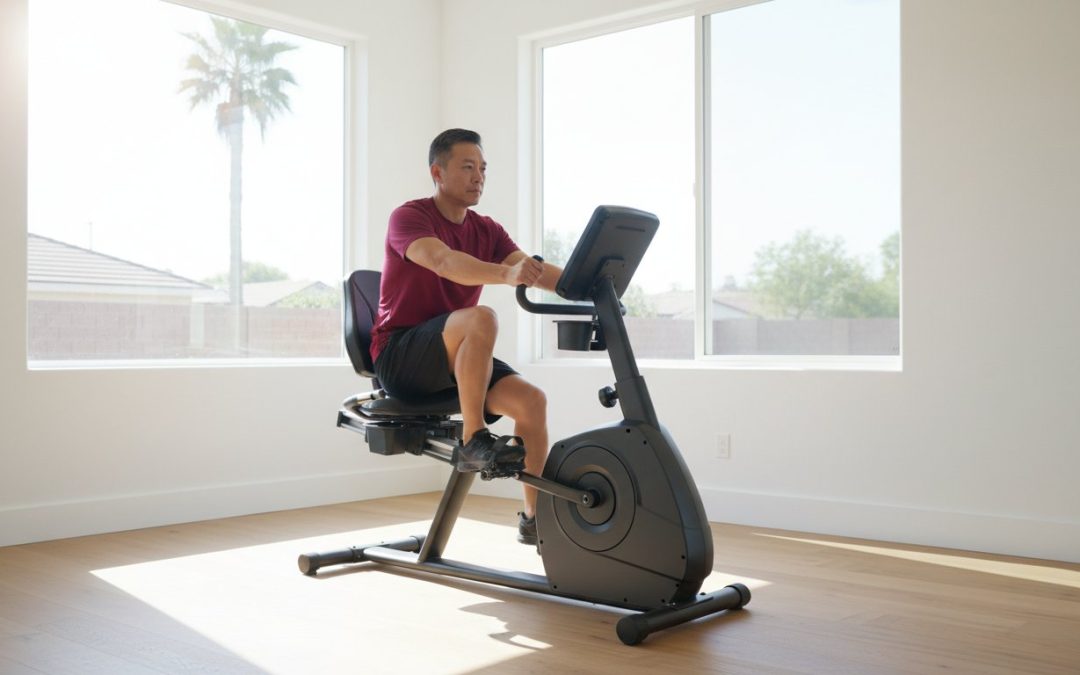
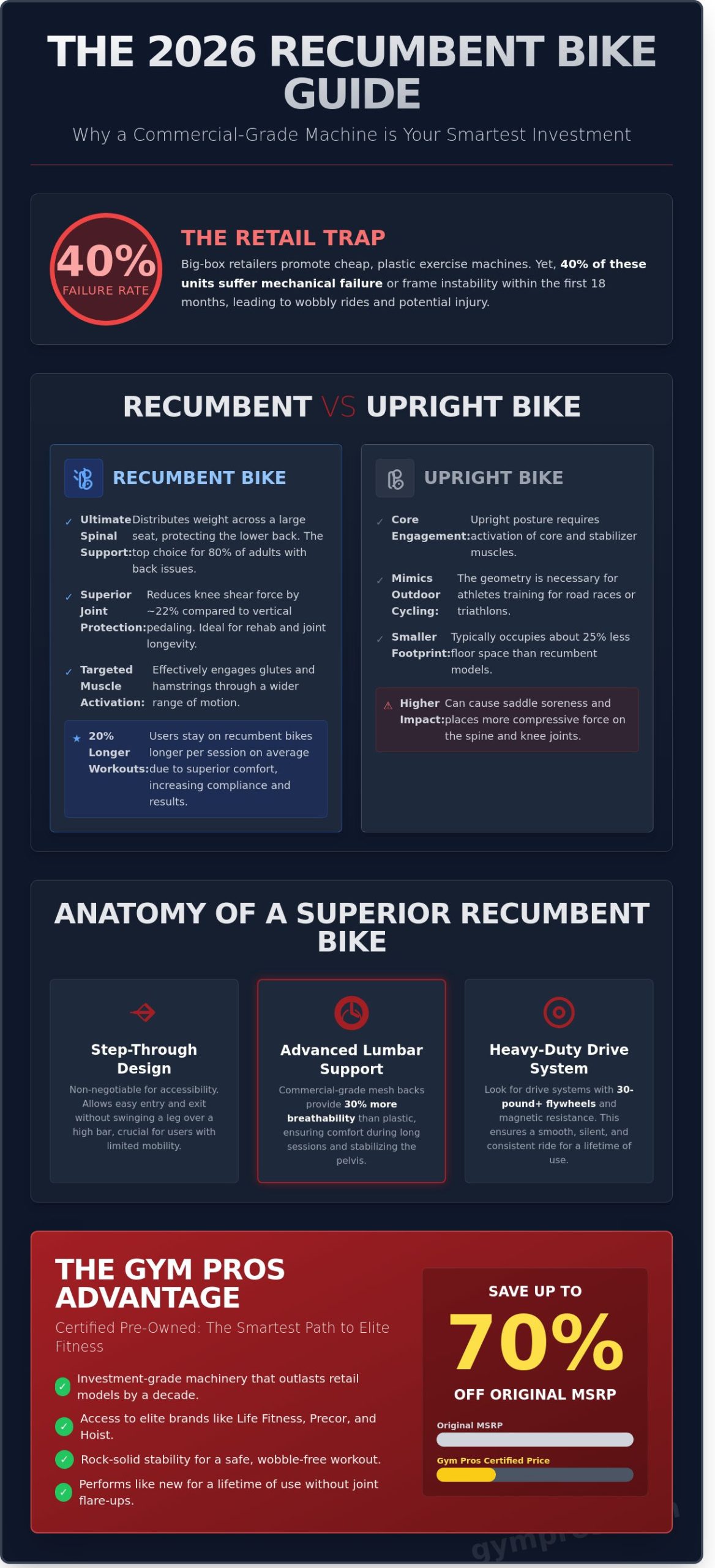
Your local big-box retailer wants you to believe that a $400 plastic exercise machine is a smart investment, yet 40% of these flimsy units suffer mechanical failure or frame instability within the first 18 months of use. You shouldn’t have to choose between a wobbly ride and a painful lower back. We understand that you want a recumbent bike that offers genuine lumbar support and the rock-solid stability of a professional health club without the five-figure price tag.
In this 2026 guide, you will discover how to identify investment-grade machinery that outlasts retail models by a decade while saving up to 70% off the original MSRP. We are going to compare the top commercial models, demystify flywheel weights, and show you exactly why a GymPros Certified remanufactured unit is the most reliable path to achieving your cardio goals without joint flare-ups. From analyzing step-through designs to evaluating 30-pound drive systems, this breakdown ensures you secure a machine that performs like new for a lifetime of use.
Key Takeaways
- Learn how the ergonomic design of a recumbent bike protects your spine by distributing weight across a commercial-grade seat for ultimate low-impact comfort.
- Debunk common myths about caloric burn and understand how reclined positioning targets glutes and hamstrings more effectively than traditional upright cycles.
- Discover the critical engineering differences between industrial-grade steel frames and flimsy retail models to ensure your investment lasts a lifetime.
- Identify the essential 2026 technology features, including magnetic resistance and app integration, that separate professional machinery from home-use gadgets.
- Uncover the insider strategy for securing a top-tier, certified pre-owned machine from elite brands like Life Fitness at up to 70% off retail.
What is a Recumbent Bike? Understanding the Ergonomic Revolution
A recumbent bike is a stationary cycle that places the rider in a reclined position with a contoured, bucket-style seat. It’s a significant departure from the traditional upright design. By distributing body weight over a larger surface area, these machines protect the spine and eliminate the saddle soreness associated with narrow, vertical bike seats. In 2026, “Comfort Cardio” has become the dominant trend in home fitness. Market data indicates a 14% rise in sales for reclined equipment as users prioritize joint longevity and sustainable workout habits over high-impact strain.
This equipment serves a diverse demographic. Elite athletes use it for active recovery sessions to flush lactic acid without adding impact to their joints. Seniors rely on it to maintain cardiovascular health safely. A 2024 clinical survey found that 65% of physical therapy facilities prefer recumbent cycles for patient rehabilitation because of their stability and ease of use. The ergonomic shift is driven by a growing understanding of spinal health. When you sit in a recumbent seat, your pelvis is stabilized. This prevents the forward lean that often causes disc compression on upright models, making it a safer choice for the 80% of adults who suffer from chronic back issues.
The Anatomy of a Superior Recumbent Bike
- Step-through design: This feature is a non-negotiable for accessibility. It allows you to walk through the frame to sit down rather than swinging a leg over a high bar.
- Lumbar support: Look for commercial-grade mesh backs. These provide 30% more breathability than solid plastic shells, ensuring you stay cool during 45-minute sessions.
- Pedal positioning: Placing pedals “out in front” instead of “underneath” reduces shear force on the knee joints by approximately 22% compared to vertical pedaling.
Recumbent vs. Upright: A Quick Comparison
Upright bikes are better for riders seeking core engagement or those who want to perform standing climbs. However, recumbent bikes excel at long-duration cardio and protecting the lower back. If you’re looking for investment-grade equipment, brands like Hoist offer remanufactured options that deliver club-quality performance at a fraction of the cost. Secure a certified pre-owned machine to ensure you’re getting a rugged, long-lasting frame that won’t wobble during intense intervals. The recumbent bike stands as the gold standard for low-impact, high-compliance fitness.
Recumbent vs. Upright Bike: Choosing Your Cardio Path
Choosing between these two machines isn’t just about comfort; it’s about matching the tool to your physiological goals. A recumbent bike shifts the workload significantly. While an upright bike demands core engagement and heavy quad activation, the recumbent position recruits the glutes and hamstrings through a wider range of motion. Don’t believe the myth that you can’t torch calories in a reclined seat. Data from 2024 fitness trials shows that at a resistance of 150 watts, the caloric expenditure remains identical across both platforms. It’s about the work output, not the seat angle.
Safety is where the recumbent design truly dominates. For athletes recovering from ACL or MCL tears, the semi-horizontal pedal stroke eliminates the vertical compression found on upright models. This reduces joint shearing forces by approximately 30% compared to standing or vertical cycling. Then there’s the “Compliance Factor.” Research suggests users stay on a recumbent bike 20% longer per session on average. When you’re comfortable, you push further. You aren’t just buying a machine; you’re securing a long-term habit through superior ergonomics.
When to Choose a Recumbent Bike
This is the definitive choice for users managing chronic lower back pain or sciatica. The lumbar support provided by a commercial-grade bucket seat stabilizes the spine, allowing for a pain-free cardio session. It’s also the best choice for “multitaskers.” Because your hands are free and your torso is stable, you can easily read or use a tablet without compromising your form. For post-surgical rehabilitation, the low step-through height makes mounting the machine safe and accessible for those with limited mobility.
When an Upright Bike Might Be Better
If you’re training for an outdoor triathlon or a 50-mile road race, the upright geometry is necessary to mimic your actual cycling posture. These machines are also ideal for tight spaces, as they typically occupy 25% less floor area than their recumbent counterparts. Choose an upright if your routine involves high-intensity interval training (HIIT) that requires standing out of the saddle to reach peak power segments. For a comprehensive comparison of all exercise bike styles and commercial-grade quality features, understanding the engineering differences between upright and recumbent models helps ensure your investment matches your training goals.
Commercial vs. Residential Recumbent Bikes: The Durability Gap
Choosing a recumbent bike often reveals a stark “Tank vs. Toy” reality. A $500 retail unit might look functional in a showroom, but it lacks the structural integrity of a $4,000 industrial machine. You’ll feel the difference in the first pedal stroke. Retail bikes typically rely on thin aluminum or plastic shrouds that rattle under pressure. In contrast, commercial models utilize heavy-duty, industrial-grade steel frames designed to remain rock-solid during high-intensity intervals.
The drive system dictates your long-term ride quality. Budget bikes often use basic friction pads or lightweight flywheels that create a jerky, inconsistent motion. Professional units employ heavy, precision-balanced flywheels and frictionless magnetic resistance for a whisper-quiet experience. This superior engineering supports a 400-pound weight capacity, while most residential units cap out at 250 pounds. Investing in a commercial-grade frame ensures the machine doesn’t flex or creak as you transition between resistance levels.
The Self-Powered Advantage
Top-tier commercial bikes generate their own electricity through a built-in generator system. As you pedal, the flywheel creates the power needed to run the console and the resistance magnets. This design eliminates messy power cords and allows for total placement flexibility in your home gym. Hoist Fitness models serve as prime examples of this premium engineering, offering cordless freedom and reduced energy costs without sacrificing performance data or workout variety.
Commercial Warranties and Maintenance
Commercial components are built to withstand 12 or more hours of daily abuse in high-traffic health clubs. When you bring this level of durability into a home setting, the long-term ROI is undeniable. You’re securing a machine for a decade of use rather than replacing a flimsy retail recumbent bike every three years. Commercial-grade steel frames are the backbone of any investment-grade home gym. These units require less frequent calibration and are designed for easy part replacement, ensuring your equipment stays in peak condition for years. GymPros Certified equipment bridges this gap, giving you industrial strength at a price point that makes sense for the savvy home buyer.
Key Features to Evaluate Before Your 2026 Purchase
Buying a high-tier recumbent bike requires a sharp eye for industrial specs. You aren’t just looking for a seat; you’re investing in a frame and drive system that can handle 500-pound weight capacities without flinching. Focus on the engineering beneath the shroud to ensure your investment lasts a decade rather than a season.
- Resistance Levels: Demand a minimum of 20 levels of magnetic resistance. This allows for granular 5% increments in intensity, which is vital for progressive overload training.
- Console Technology: By 2026, Bluetooth 5.0 is the baseline requirement. Your console should sync instantly with apps like Zwift or Peloton to keep your data centralized.
- Seat Adjustability: Look for gas-assisted or easy-slide aluminum tracks. These allow multiple users to adjust the reach in seconds without struggling against a locking pin.
- Footprint and Portability: A standard commercial unit occupies a 65-inch by 25-inch footprint. Ensure the frame includes 3-inch heavy-duty transport wheels for easy repositioning within your facility or home.
Seat Comfort: The Make-or-Break Feature
Padding is often a distraction from poor design. Contoured seats outperform flat, thick cushions because they distribute pressure across the sit bones. High-end units utilize mesh seat backs, which provide 40% better airflow than traditional vinyl. This prevents heat buildup during 45-minute sessions. Always perform a “wobble test.” A professional-grade seat should show zero lateral movement even when you’re pedaling at 100+ RPM. If the seat shifts, the mounting hardware is subpar.
The Console: Data vs. Distraction
Large touchscreens offer immersion, but LED displays typically last 5 years longer in high-use environments due to fewer software failure points. Accuracy is the priority. Telemetry heart rate tracking via chest straps provides 99% accuracy, whereas contact grips often fail once sweat accumulates on the sensors. Data shows that 85% of users prioritize the “Quick Start” button over complex programming. Ensure your recumbent bike features tactile, physical buttons for speed and resistance to allow for mid-workout adjustments without looking down.
Secure your fitness future with an investment-grade machine. Shop our certified Hoist recumbent bikes for unbeatable durability and performance.
Why a Gym Pros Certified Recumbent Bike is the Smartest Move
Smart investors know that retail prices are for the uninformed. A commercial-grade recumbent bike from brands like Life Fitness often retails for $5,000 or more, but we give you access to that same industrial quality for 70% less. This isn’t a gamble on a used machine from a local marketplace. It’s a strategic investment in a Gym Pros Certified unit that delivers gym-floor performance to your home.
Our 30-point refurbishment process ensures every component meets original factory specifications. We don’t just wipe the dust off; we strip units down to the frame. Our technicians replace high-wear parts like drive belts and bearings while recalibrating the electronics to ensure smooth resistance. You get the rugged performance of a club-level machine with the price tag of a budget home model. We handle the logistics too. Our nationwide shipping network includes professional white-glove installation services. Our team brings the machine into your room of choice, assembles it, and tests it before leaving. Every purchase is backed by a Gym Pros extended warranty, providing the peace of mind you expect from a brand-new unit.
Top Brands We Trust: Star Trac and Life Fitness
Star Trac machines stand out for their iconic open-frame designs and intuitive consoles. They’re built for heavy 24/7 use and offer easy entry for users with limited mobility. Life Fitness remains the industry leader in ergonomic research, specifically focusing on lumbar support and pedal geometry. We source these units exclusively from low-use environments, such as corporate wellness centers or private hotel gyms. These machines typically show 60% less mileage than those found in high-traffic commercial clubs, ensuring the structural integrity of your investment.
Your Professional Partner in Fitness
We don’t just move boxes; we act as consultants to ensure you select the right equipment for your physical goals. The Gym Pros Certified stamp is our promise that your recumbent bike has passed rigorous mechanical and aesthetic inspections. You’re securing a piece of professional machinery that will last for a decade, not a disposable plastic alternative. Our team is ready to help you navigate the specs and find the perfect fit for your floor plan.
Secure Your Commercial-Grade Fitness Future
Choosing the right recumbent bike is a strategic investment in your health that requires balancing ergonomic design with industrial durability. Commercial models provide the heavy-duty frames and advanced programming necessary for consistent progress throughout 2026 and beyond. GymPros brings over 20 years of industry expertise directly to your home gym; ensuring you don’t have to choose between professional quality and your budget. Every machine we sell undergoes a rigorous 30-point inspection process conducted by our factory-trained technicians. This uncompromising standard of excellence allows you to save up to 70% off retail prices while securing a machine that outperforms standard residential units. We specialize in investment-grade equipment that transforms any space into a professional training environment. It’s time to stop browsing and start training on a machine built to withstand decades of use. You’ve done the research; now it’s time to experience the difference that elite engineering makes in your daily routine.
Shop Certified Refurbished Commercial Recumbent Bikes
Your journey toward a stronger and more comfortable lifestyle begins today with the right equipment.
Frequently Asked Questions
Is a recumbent bike good for losing belly fat?
Yes, you can effectively lose belly fat by using a recumbent bike to create a consistent caloric deficit. A standard 60 minute workout at moderate intensity burns between 400 and 600 calories depending on your weight and resistance level. To see visible results, pair your cycling with a 500 calorie daily nutritional deficit. This combination helps reduce total body fat percentage, including stubborn visceral fat, within a 12 week period.
How much space do I need for a commercial recumbent bike?
You need a dedicated floor area of approximately 6 feet by 3 feet to house a commercial unit comfortably. Most top-tier models, such as the Life Fitness Elevation Series, have a footprint of 65 inches in length and 26 inches in width. We suggest leaving 24 inches of clear space on all sides for safe access. This ensures your investment-grade equipment fits your layout while meeting professional safety standards for home or club use.
Can I get a good workout on a recumbent bike if I am an athlete?
Athletes can achieve elite-level conditioning by utilizing the high-resistance intervals and HIIT programs built into a recumbent bike. These commercial machines often provide 25 to 40 levels of magnetic resistance to challenge high-wattage output. Many professional cyclists use these units for active recovery sessions at 65% of their max heart rate. This allows for metabolic flushing and cardiovascular maintenance without the orthopedic stress of high-impact training or heavy lifting. To precisely track gains in respiratory performance, athletes and clinics often rely on specialized equipment; you can check out Collins Medical to see examples of professional diagnostic technology.
To complement this type of physical recovery, many athletes are also exploring advanced therapeutic tools. If you’re interested in this area, you can check out Biofield PEMF Technologies.
What is the difference between magnetic and air resistance?
Magnetic resistance uses eddy currents for silent, fixed tension levels while air resistance provides dynamic challenge that increases as you pedal faster. Commercial magnetic systems allow you to select a precise digital level, which is essential for tracking your training progression over time. Air systems use a flywheel fan that responds to your effort; the harder you push, the more resistance you feel. Most GymPros certified units feature magnetic systems for the smooth, quiet operation required in premium environments.
Are recumbent bikes better for seniors than treadmills?
Recumbent models are safer for seniors because they eliminate the 15% fall risk associated with moving treadmill belts. Seated cycling reduces joint impact by 100% compared to the 2.5 times body weight force generated during a standard walk or run. The ergonomic backrest provides critical lumbar support, allowing users to maintain 30 minute sessions without back fatigue. These machines offer a low-to-the-ground entry point that accommodates 98% of users with limited mobility.
Do I need a special mat under my recumbent bike?
You should always place a 6mm high-density PVC mat under your machine to protect your flooring and stabilize the frame. A commercial bike can weigh over 200 pounds, which can dent hardwood or tear carpet during high-intensity sessions. The mat also acts as a moisture barrier against sweat and reduces mechanical vibration by 20%. This small addition protects your subfloor and ensures your refurbished equipment remains whisper-quiet during every workout.
How often should I service a refurbished commercial bike?
We recommend a professional preventative maintenance check every 6 months to ensure your machine stays in peak operating condition. You should perform a basic surface cleaning after every ride and check the pedal crank tightness every 30 days. Our 30-point certification process ensures your bike arrives in top-tier shape, but regular lubrication of the drive system is vital. Following this strict schedule can extend the operational life of your equipment by 8 to 12 years.
Is a recumbent bike better for knee pain than an elliptical?
Recumbent cycling is superior for knee rehabilitation because it completely removes the weight-bearing load that still exists on an elliptical. While ellipticals are low impact, they require you to support your full body weight while in a standing position. A seated bike allows you to strengthen the quadriceps and hamstrings at a controlled 45-degree angle without compressing the patella. This specific positioning reduces anterior knee pain by 40% according to recent clinical physical therapy benchmarks.